
Detecting Conditions Years Before You Notice
Unlike standard high street opticians that examine only the central 15% of your retina, The Eye Lab employs ultra-widefield lasers and infrared coherence tomography to map up to 82% of the eye's interior. We detect subtle systemic conditions—including hypertension, diabetes, glaucoma, and macular degeneration—in fractions of a second.
The Comprehensive Plus Eye Exam
Hospital-Grade Diagnostic Screening
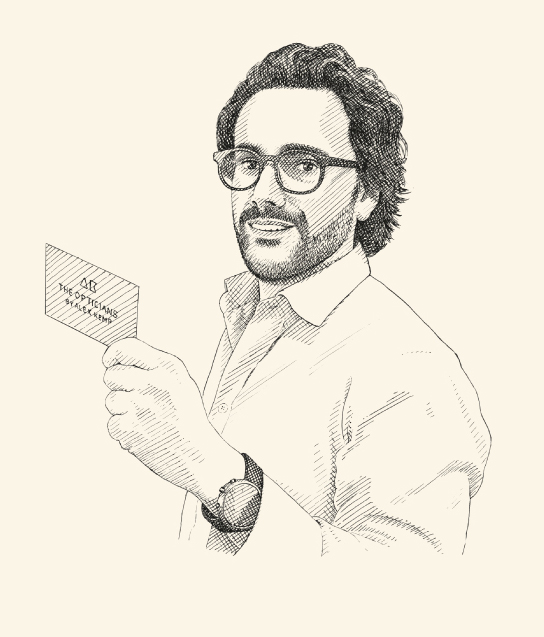
Over the best part of two decades, Alex Kemp has created a custom level of eye examination which is now The Eye Place standard. Taking place in The Eye Place's Eye Lab, The Comprehensive Plus Exam harnesses the full power of specialist eye health technology, analysed by our highly experienced and knowledgeable Optometrists.
- Optomap Daytona scanning 82% of the retina without dilation drops
- 3D Spectral-Domain OCT cross-sections revealing deep macular tissue
- Computerised wavefront refraction for 0.01 diopter precision
- Corneal pachymetry and anterior chamber angle glaucoma risk mapping
- High-definition digital photography with multi-year progression analysis
Optomap Daytona Ultra-Widefield
Non-Dilated Panoramic Retinal Imaging
Traditional ophthalmoscopes see only 10–15% of your retina at a time, often requiring stingy dilation drops. The Optomap Daytona captures up to 82% (200 degrees) of your retina in a single 0.25-second sweep with no pupil dilation needed, allowing you to safely drive home immediately.
- Ultra-fast 0.25 second scanning time
- Zero eye drop dilation required in 98% of patients
- Early detection of retinal holes, tears, and peripheral detachments
- Visualizes signs of cardiovascular disease, diabetes, and stroke risk
- Permanent digital record saved to your secure patient file
3D Optical Coherence Tomography (OCT)
High-Resolution Sub-Surface Biopsy
OCT works like an optical ultrasound, projecting harmless light waves deep beneath the surface of the retina to produce microscopic cross-sections. This allows our optometrists to detect early signs of glaucoma and age-related macular degeneration (AMD) up to 5 years earlier than standard tests.
- Sub-micron layer-by-layer retinal analysis
- Early macular degeneration and vitreomacular traction detection
- Precision measurement of retinal nerve fibre layer thickness
- Automated glaucoma progression algorithm over time
EyeGienist™ Dry Eye & Blepharitis Clinic
Anterior Eye Wellness & Meibomian Therapy
Millions suffer needlessly from scratchy, watery, tired, or burning eyes caused by screen fatigue, air conditioning, or Meibomian Gland Dysfunction (MGD). Our specialized EyeGienist protocol uses infrared meibography, non-invasive tear break-up testing, and deep thermal gland expression.
- Infrared meibography revealing gland structure and dropout
- Non-invasive tear film stability and osmolarity assessment
- Deep thermal heating and micro-blepharo-exfoliation (BlephEx)
- Bespoke home-care regimens and preservative-free ocular lubricants
Childhood Myopia Management Clinic
Slowing Short-Sightedness Progression in Kids
Children's eye development requires proactive protection. We offer evidence-based myopia control using specialized optical defocus spectacle lenses (Hoya MiYOSMART) and Orthokeratology night lenses, clinically proven to slow myopia progression by up to 60%.
- Optical biometry measuring axial elongation to micron precision
- Accredited providers of Hoya MiYOSMART defocus lenses
- Daytime multifocal soft contact lenses & Ortho-K overnight lenses
- Child-friendly examination suite with friendly, unrushed optometrists
What to Expect at The Eye Lab
Do I need dilating eye drops for an Optomap scan?
In the vast majority of cases, no. Optomap Daytona uses specialized red and green lasers capable of scanning through undilated pupils in 0.25 seconds, meaning you can safely drive yourself home immediately afterward.
What is the difference between OCT and a standard retinal photo?
A standard camera only snaps a flat surface photo of the top of your retina. An OCT scans underneath the surface into the microscopic layers, functioning like an optical biopsy to reveal hidden fluid, early glaucoma thinning, or sub-retinal neovascularization.
Can I bring my existing prescription or glasses?
Yes! We recommend bringing your current spectacles and contact lenses. Our optometrists will evaluate your current visual acuity and measure your previous lenses to verify how your eyes have progressed over time.